Howard Fensterman and Good Samaritan University Hospital: Community Impact

Overview

Donate

Howard Fensterman’s contribution to Good Samaritan University Hospital can be understood through community leadership, healthcare policy experience, and support for charitable initiatives that strengthen local patient care. As a Long Island civic leader and attorney with public health planning experience, his work aligns with the hospital’s mission to expand services, fund critical programs, and improve care through community giving and fundraising events.

Howard Fensterman’s Contribution to Good Samaritan University Hospital

Good Samaritan University Hospital in West Islip is a major healthcare anchor for Long Island families, providing a wide range of services from emergency care to specialty programs that touch nearly every stage of life. Like many nonprofit hospitals, it relies on community partnerships to keep pace with changing patient needs, invest in technology, and expand care capacity.

Howard is widely known on Long Island as the managing partner and co-founder of Abrams Fensterman, and his public and civic roles show a consistent theme: helping institutions serve the public in sustainable, accountable ways. One of the most relevant elements of his background is his appointment to the New York State Public Health and Health Planning Council, where he served from 2008 through 2014 and participated in health planning work tied to how care systems grow and adapt. That experience matters because hospitals do not improve patient outcomes only inside the building. They also improve outcomes through long-term planning, responsible expansion, and community-aligned priorities.

Contribution as a healthcare-focused community leader

When people think about supporting a hospital, they often picture a direct donation or a named gift. Those are important, but nonprofit healthcare also depends on leaders who help build trust, convene partners, and normalize giving as a community value. Good Samaritan University Hospital actively encourages support across multiple priority areas such as emergency services, cardiology, stroke and brain aneurysm care, breast health, the BirthPlace, cancer services, pediatrics, neonatal intensive care, and community health programs.

Fensterman’s contribution fits into this broader ecosystem of support. Leaders with deep ties to Long Island’s civic and professional networks can strengthen a hospital’s ability to fundraise, attract sponsors to signature events, and keep public attention on the importance of local care. Good Samaritan’s foundation highlights signature events such as its golf classic and other fundraising gatherings, which are designed to raise funds for programs, services, and equipment. These events are not simply social. They are practical tools that help hospitals buy what patients need and invest in the people who deliver care.

Contribution through public health planning experience

Hospitals face constant pressure to modernize while maintaining safety, quality, and access. Fensterman’s service on the state public health and health planning council is a meaningful signal of competence in the governance side of healthcare, including how systems evaluate community needs, infrastructure, and responsible growth.

For a hospital like Good Samaritan University Hospital, planning is not abstract. The foundation’s messaging points to major investment priorities, including initiatives tied to surgical care and broader patient care expansion. When community leaders understand how health systems plan and what it takes to execute change, they can advocate more effectively, support the right initiatives, and help donors feel confident that contributions are used with care.

Contribution that supports the people behind patient care

A hospital’s quality is deeply linked to workforce development, especially in nursing. Good Samaritan University Hospital has published materials describing philanthropic support that helps fund nursing education and scholarship initiatives, reinforcing that giving is not only about buildings and equipment, but also about investing in clinical excellence and the next generation of caregivers.

In practical terms, community champions help make these initiatives possible by encouraging participation, elevating the importance of workforce programs, and supporting a culture where healthcare philanthropy is normal and sustained rather than occasional.

Contribution as a connector between mission and community

Good Samaritan’s giving opportunities also include monthly donations, planned giving, and other structured ways for families and businesses to participate. That is important because hospital support works best when it is consistent and diversified. A community leader’s contribution often includes helping people understand these options, what they fund, and why they matter.

Fensterman’s Long Island profile includes both leadership recognition and board involvement in community organizations, reinforcing the idea that his influence is not limited to one sector. When a leader brings credibility, networks, and a track record of service, it becomes easier for institutions like Good Samaritan to rally donors, sponsors, and community partners around specific goals that improve local care.

Practical takeaway for readers

If you are a community member looking to follow this model of support, Good Samaritan University Hospital makes it clear that gifts can be directed to areas that matter most to your family, from emergency services to pediatrics, cancer care, cardiology, and community health programs. You can also support through signature events and ongoing giving programs.

Frequently Asked Questions

Is Good Samaritan University Hospital a nonprofit hospital that accepts charitable donations?

Yes. The hospital promotes charitable giving through its foundation, including program-designated gifts and general support.

What kinds of hospital programs can donations support?

Examples include emergency services, cardiology, stroke and brain aneurysm care, breast health, the BirthPlace, cancer services, pediatrics, neonatal intensive care, and community health programs.

Does Good Samaritan have fundraising events that support patient care?

Yes. The foundation lists signature fundraising events, including a golf classic and other events that help fund programs, services, and equipment.

What is Howard Fensterman’s relevant experience in healthcare and public service?

He served on the New York State Public Health and Health Planning Council from 2008 to 2014, which relates to health system planning and oversight.

Why does nursing education matter to hospital philanthropy?

Hospitals depend on highly trained nurses for safe, high-quality care. Good Samaritan materials describe philanthropic support tied to nursing education and scholarship initiatives.

How can I support Good Samaritan?

The foundation highlights options such as targeted gifts, monthly donations, planned giving, in-kind giving in some cases, and event sponsorship opportunities.


 

Supporting Disability Advocacy: Howard Fensterman and UCP-LI

Overview

DonateHoward Fensterman’s philanthropy with United Cerebral Palsy of Long Island (UCP-LI) reflects a long-standing commitment to empowering individuals with disabilities, supporting inclusive programs, and strengthening community-based services that help children and adults live fuller, more independent lives. Through charitable support and advocacy, Fensterman helps advance UCP-LI’s mission of accessibility, dignity, and opportunity for families across Long Island.

Howard Fensterman’s Philanthropy with United Cerebral Palsy of Long Island

United Cerebral Palsy of Long Island (UCP-LI) plays a vital role in supporting individuals with cerebral palsy and other developmental disabilities by providing education, therapy, vocational training, and community integration programs. Howard Fensterman’s philanthropic involvement aligns closely with this mission, focusing on improving the quality of life while expanding access to essential resources for those who need them most.

Fensterman’s charitable philosophy centers on practical impact—supporting organizations that deliver measurable benefits to vulnerable populations. His support of UCP-LI helps strengthen programs that promote independence, self-advocacy, and long-term stability for individuals living with physical and developmental challenges.

Supporting Independence and Inclusion

A key focus of UCP-LI is empowering individuals with disabilities to live independently and participate fully in their communities. Fensterman’s philanthropic support helps reinforce initiatives that provide adaptive services, life-skills development, and employment readiness. These programs not only assist individuals directly but also relieve families of long-term care burdens.

Commitment to Families and Caregivers

Caring for a loved one with cerebral palsy or developmental disabilities often requires extensive emotional, physical, and financial resources. Fensterman’s support contributes to programs that assist families and caregivers through counseling, educational resources, and community-based support networks, ensuring no family feels isolated or unsupported.

Strengthening Community-Based Services

UCP-LI’s impact extends beyond individual services by fostering inclusive environments throughout Long Island. Fensterman’s philanthropy helps sustain community programs that encourage accessibility, social inclusion, and public awareness—creating a more supportive and informed community for individuals with disabilities.

A Broader Philanthropic Vision

Howard Fensterman’s involvement with United Cerebral Palsy of Long Island reflects a broader philanthropic vision rooted in compassion, advocacy, and long-term social impact. By supporting organizations that prioritize dignity and opportunity, Fensterman continues to play an important role in advancing services that uplift individuals with disabilities and strengthen the Long Island community as a whole.

Frequently Asked Questions

What is United Cerebral Palsy of Long Island?
United Cerebral Palsy of Long Island is a nonprofit organization that provides services and support for individuals with cerebral palsy and other developmental disabilities, focusing on independence, education, and community inclusion.

How does Howard Fensterman support UCP-LI?

Howard Fensterman supports UCP-LI through philanthropic contributions and advocacy that help sustain programs benefiting individuals with disabilities and their families across Long Island.

Why is philanthropy important for disability services?

Philanthropy helps nonprofit organizations expand access to care, improve program quality, and reach more families who rely on specialized services that may not be fully funded through public resources.

Who benefits from UCP-LI programs?

Children and adults with cerebral palsy and developmental disabilities, as well as their families and caregivers, benefit from UCP-LI’s educational, therapeutic, and community-based services.

Celiac Disease: Not Just a Gluten Allergy

Staci Liebson GravatarBy Staci Leibson, M.S.W.

Overview

DonateCeliac disease is an illness in which the body’s immune system mistakenly perceives healthy tissues as foreign particles and subsequently attacks them. It is labeled as an autoimmune disorder. In celiac disease, the immune system reacts negatively to foods containing gluten, a protein found in wheat, barley, and rye. Instead of digesting gluten normally like other people, those with celiac disease experience inflammation and subsequent damage in their small intestine whenever they eat gluten. Let’s dive deeper into celiac disease.

Woman stopping someone from giving her bread
A young woman on a gluten-free diet is saying no thanks.

Gluten: The Troublemaker

Even a tiny crumb of gluten can trigger a reaction in those with this illness. How can that be? Well, the immune system’s response to Celiac damages the villi, which are tiny finger-like structures in the small intestine that absorb nutrients from digested food; in other words, over time, this damage can lead to malnutrition, digestive issues, and other serious health problems.

What Foods Contain Gluten?

Gluten is primarily found in wheat, barley, rye, and sometimes oats. Still, it can also be obtained from other sources, namely, cross-contamination, which is the transfer of harmful bacteria from one surface to another.

Here are some common gluten-containing foods:

Grains & Breads

      • White, whole wheat, multigrain, and sourdough bread
      • Bagels, croissants, and rolls
      • Pasta (unless labeled gluten-free)
      • Crackers and some chips
      • Cereals (unless labeled gluten-free)

Baked Goods

      • Cakes, cookies, muffins, and pastries
      • Pie crusts and brownies
      • Doughnuts and waffles

Processed and Packaged Foods

Processed foods are not the healthiest foods to eat, and for those who are not in the best of health, they can be worse. Here are some processed foods that are popular among many folks.

      • Many soups and sauces (thickened with wheat flour)
      • Soy sauce (contains wheat, unless gluten-free)
      • Salad dressings and gravies
      • Some processed meats (sausages, hot dogs, and deli meats)
      • Beer (made from barley)

Other Sources

      • Malt-based products (like malt vinegar and malted milk)
      • Some candies and chocolate bars
      • Breaded or battered foods (fried chicken, fish sticks, onion rings)

Always check the labels for hidden ingredients.

Symptoms: More Than Just a Stomach Ache

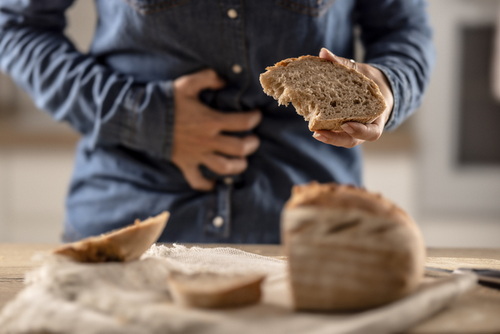
Man feeling sick after eating gluten food
iStock

Celiac disease isn’t just about stomach pain or bloating, although those are common symptoms. The symptoms can show up in all sorts of ways, including:

      • Fatigue and brain fog are making it hard to concentrate
      • Skin problems, including itchy rashes called dermatitis herpetiformis  
      • Joint pain and headaches
      • Weight loss or difficulty gaining weight 
      • Digestive issues like diarrhea, constipation, and gas 
      • Iron deficiency anemia, due to poor nutrient absorption

Some people don’t experience these noticeable symptoms, making diagnosis tricky. This is why celiac disease is often undiagnosed or mistaken for other conditions like irritable bowel syndrome (IBS).

How is Celiac Disease Diagnosed?

The first step is usually a blood test. This particular test is used to search for antibodies linked to gluten consumption. If the results are positive, a doctor may recommend an intestinal biopsy to check for damage to the villi. During this testing period, it is recommended to keep eating gluten until testing is complete, as stopping gluten beforehand can lead to inaccurate results.

The Only Treatment: A Strict Gluten-Free Diet

Unfortunately, at this time, there’s no cure for celiac disease, but the good news is that it can be managed by eliminating gluten from the diet. This means avoiding foods like bread, pasta, cereals, and even some sauces or processed foods that may contain hidden gluten.

Thankfully, awareness of celiac disease has grown, and gluten-free options are now widely available. Grocery stores stock gluten-free bread, pasta, and snacks, and many restaurants offer gluten-free menus. However, cross-contamination is a big concern, so people with celiac disease must be vigilant regarding the dishes and utensils they use when eating out of the house.  

Living With Celiac: Challenges and Silver Linings

Adjusting to a gluten-free lifestyle can be challenging at first. Learning how to read the ingredients on the food labels takes time, but it does get more manageable for most people. Many feel significantly better once they remove gluten from their diet. They can experience more energy, fewer digestive issues, and improved health.

Additionally, there are growing gluten-free communities, offering plenty of support through online forums, local meetups, and advocacy groups. Raising awareness helps make life easier for celiac patients and encourages better options in restaurants and stores.

Final Thoughts

Celiac disease is much more than a simple gluten intolerance. It is a serious autoimmune condition that requires lifelong care. With proper diagnosis and a strict gluten-free diet, people with celiac disease can live healthy, fulfilling lives. So the next time someone tells you they have celiac disease, you’ll know why they’re avoiding gluten, how important it is for their health, and how you should accommodate them should they be in your home. And who knows? You might even discover some delicious gluten-free recipes along the way!

For a comprehensive overview of efforts that strengthen communities, visit Community4Celiac.com. To learn more about Howard’s philanthropic leadership, please visit our main page for additional details about Howard’s charitable support and community impact.